We live in an increasingly complex world, therefore understanding the nature of social, cultural and political issues in the US and across the world is exceptionally difficult. It is clear that there are no easy answers to our world’s current problems — making it all the more important that we dedicate ourselves to understanding the complicated answers. The Graduate School at the University of Washington is dedicated to training the next generation of individuals — in laboratories and classrooms, in business and government, at home and abroad — to provide leadership and to impact positive change through innovative solutions.
Compelled by the world around them, our graduate students are positioned at the leading edge of learning and discovery, seeking new approaches and innovative solutions to some of our most intractable problems. To recognize and honor the “scholar-citizens” in our midst, the Graduate School offers the Graduate School Medal.
The medal is given to recognize a doctoral candidate whose academic expertise and broader understanding of societal issues are integrated in a way that demonstrates an exemplary commitment to the University and its larger community. The medal acknowledges that any given question or issue may involve multiple perspectives and nuanced interpretations, reflected in the candidate’s scholarly research and contributions to advancing knowledge. It honors doctoral candidates who move beyond seeking simple answers to complex problems.
About the Graduate School Medal
The Graduate School Medal is a $5,000 award presented to a Ph.D., DMA, Au.D., DNP, DPT, or Ed.D. candidate who demonstrates an outstanding commitment to the University and its broader community. The Graduate School Medal honors individuals whose academic expertise and ability to integrate knowledge reflect a dedication to advancing scholarship and contributing to meaningful progress. The impact recognized by this award is tied to the candidate’s academic work and its influence on addressing complex challenges through research and innovation. The Medal is funded by the UW Graduate Fellowship Fund, which is supported primarily by annual gifts from alumni and friends of the University. The medal recipient will be announced in mid- to late May 2026.
NOMINATION DEADLINE: Wednesday, April 15, 2026, noon (PT)
Eligibility
Any graduate student who has achieved candidacy for a Ph.D., D.M.A. or Ed.D. and who expects to receive their degree by August 2027 is eligible for the Graduate School Medal, as is any student in a practice doctoral program (Au.D., D.N.P., D.P.T., some Ed.D. programs) who expects to receive their degree by August 2026.
Students enrolled in J.D., M.D., Pharm.D., and D.D.S. degrees are not eligible for this award program.
Departments may nominate only one student.
Nomination process
Doctoral candidates must be nominated by their home academic department. The Graduate School Medal does not take applications directly from students. Departmental staff or faculty authorized to use the Awards section in MyGradProgram must submit nomination materials through the this portal.
Each nomination consists of the following:
- a 1–2 page nomination letter from a dean/director/chair;
- a 1–3 page (double-spaced) statement from the student addressing the integration of their academic experience and social awareness, and describing their vision for promoting political, cultural and social change and how their academic record advances this;
- a 1–2 page letter from the chair of the nominee’s doctoral supervisory committee;
- a curriculum vitae from the student.
Nominations must be submitted through the Awards section in MyGradProgram absolutely no later than Wednesday, April 15, 2026 at noon to be accepted for consideration.
Late submissions will not be considered.
Review process
Nominations meeting initial review requirements will be examined by a committee consisting of Graduate School deans and a current member of the Graduate Council. The committee will select a pool of finalists to be forwarded to the Graduate School Council for consideration. The Council will review the finalists’ applications, conduct interviews during mid- to late April or early May, and make the final selection.
Criteria for selection
In addition to the minimum criteria listed above, nominees will be expected to demonstrate — and/or show potential to demonstrate — an ability to integrate intellectual insight with practical application.
Successful nominees will:
- apply their disciplinary expertise to address complex challenges and contribute to meaningful solutions,
- be committed to “problem-oriented” scholarship and its interdisciplinary approach, and
- connect their academic work with broader professional or community contexts.
The Graduate School Medal recipient will exemplify the integration of graduate-level achievement with contributions that extend the impact of research beyond the University.
2025 Graduate Medal Award recipient
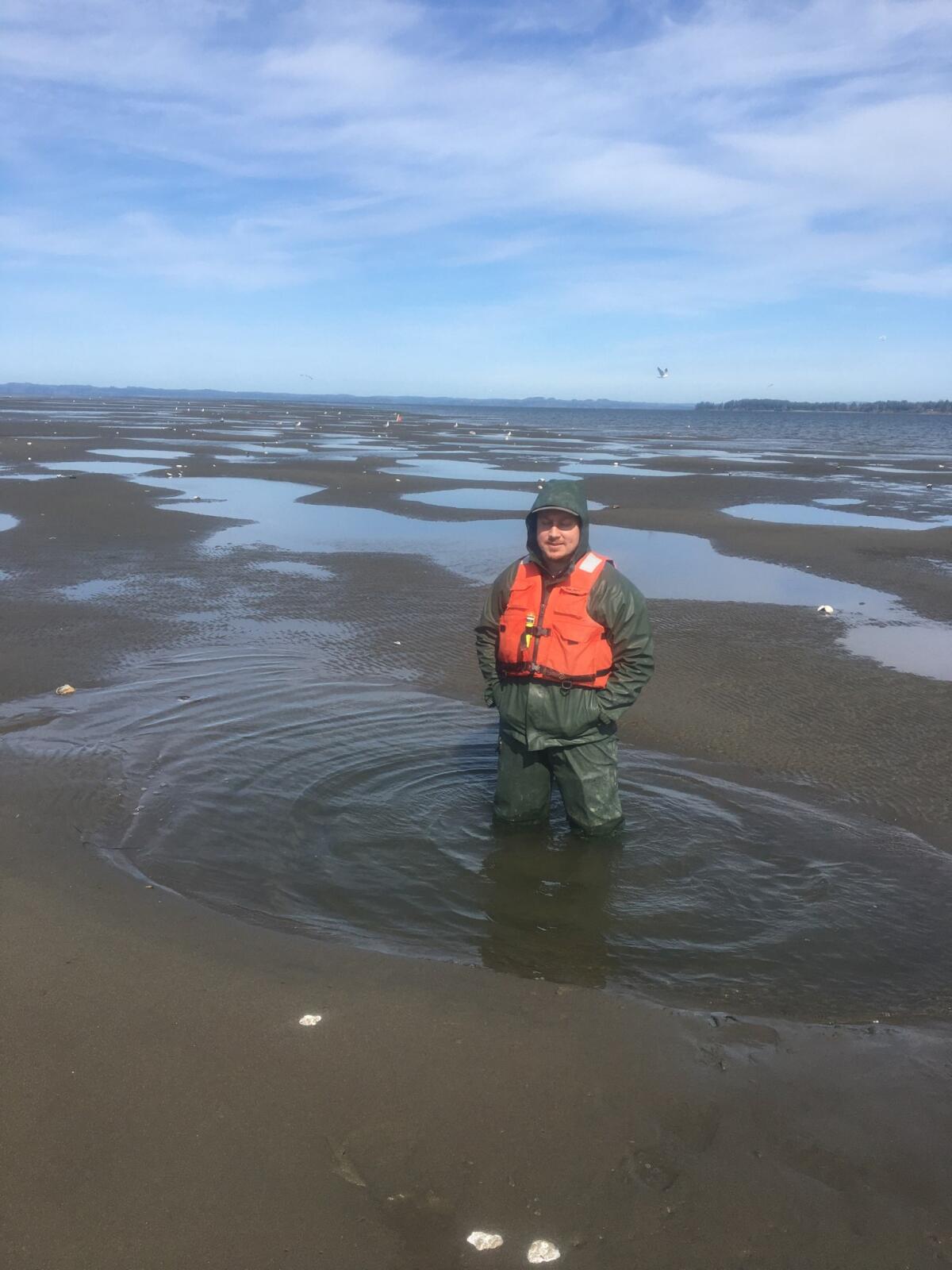
Wesley Hull
Previous award recipients
- 2025: Wesley Hull, Biology
- 2024: Nathalie Thelemaque, Civil and Environmental Engineering
- 2023: Prerna Juneja, Information School
- 2022: Matthew Fowle, Public Policy and Governance
- 2021: Nick Maurice, Molecular and Cellular Biology
- 2020: Paul Tubig, Philosophy
- 2019: Brandon Nguyen, Rehabilitation Medicine
- 2018: Cassandra Simonich, Molecular and Cellular Biology
- 2017: Niket Thakkar, Applied Mathematics
- 2016: Erica Sanchez, Molecular and Cellular Biology
- 2015: Cuauhtemoc Mexica, Comparative Literature
- 2014: Shiri Azenkot, Computer Science and Engineering
- 2013: Chris Bassett, Mechanical Engineering
- 2012: Jill Woelfer, Information School
- 2011: Yaw Anokwa, Computer Science and Engineering
- 2010: Anna Cavender, Computer Science and Engineering
- 2009: Renee Byrd, Women Studies
- 2008: Caroline Faria, Geography
- 2007: Thomas Robey, Bioengineering
- 2006: Laura Certain, Genome Sciences and Karen Rosenberg, Women Studies
- 2005: Mae Henderson, Women Studies and Melanie Roberts, Neurobiology and Behavior
- 2004: Vibha Sazawal, Computer Science and Engineering and Jeanette Bushnell, Women Studies
- 2003: Selina Mohammed, Nursing and Maha El-Taji, Near and Middle Eastern Studies